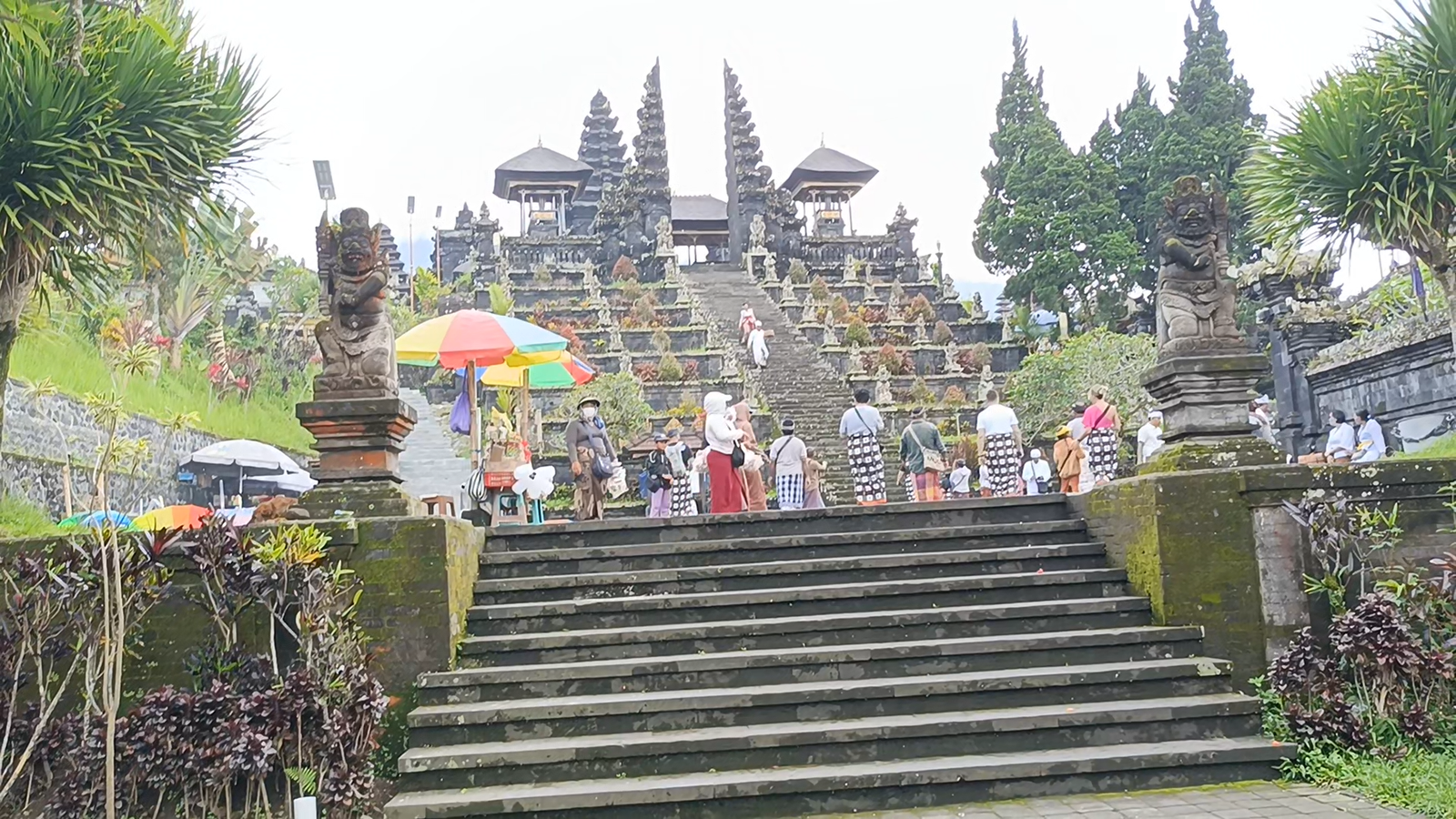
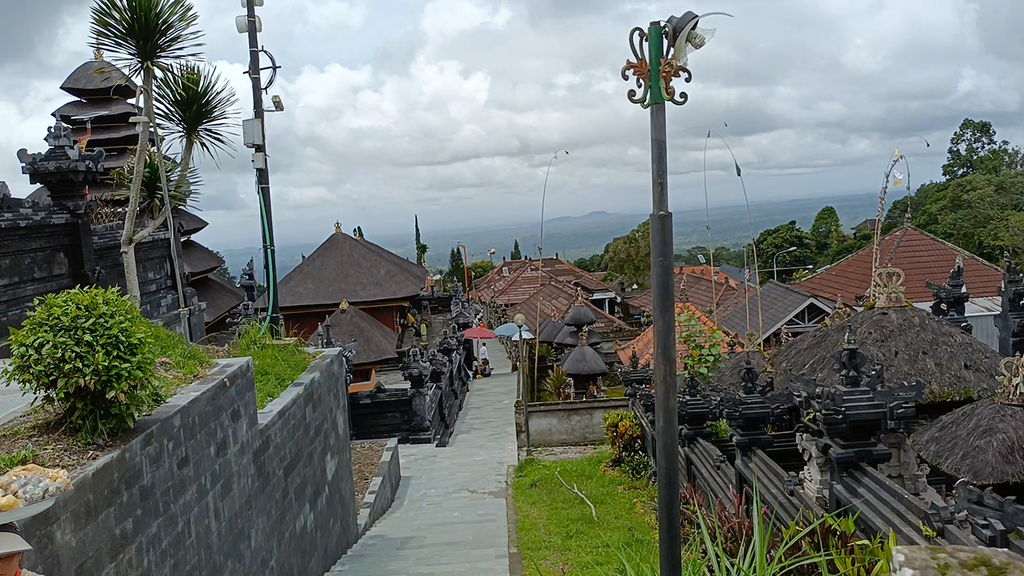
High on the slopes of Mount Agung, Bali’s highest and most sacred mountain, lies one of the island’s most extraordinary religious sites — Pura Besakih, popularly known as the Mother Temple of Bali. At an altitude of around 900–1,000 metres, the temple complex offers not only a deeply spiritual experience but also spectacular views of the surrounding mountains and countryside.
A Temple with Ancient Roots
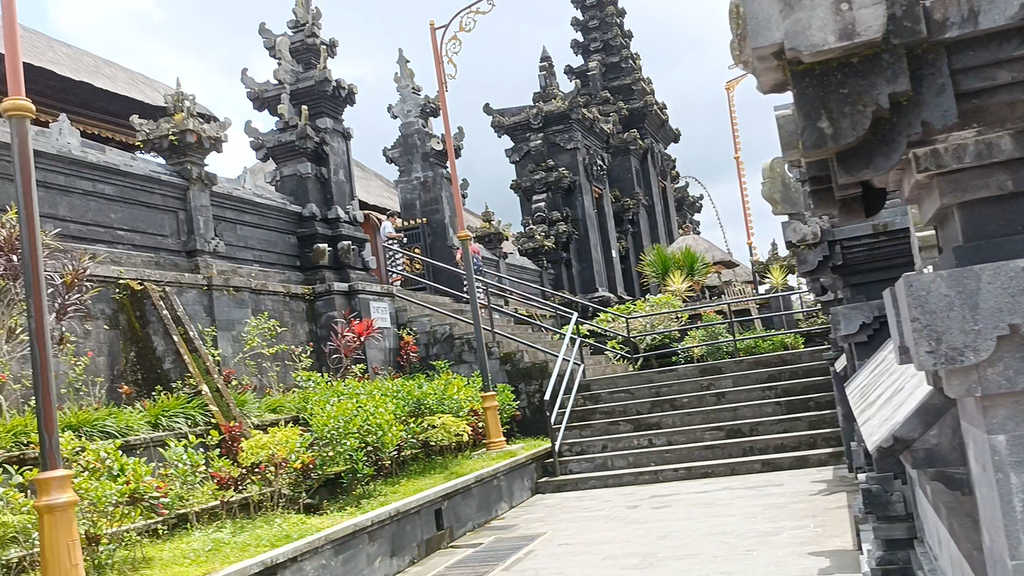
The history of Besakih reaches far back into Bali’s past. Archaeological remains, including megalithic structures and stone monuments, suggest that the area was considered sacred even before the arrival and development of Hinduism in Bali. The first recorded written reference to Besakih dates to an inscription from around 1007 AD.
There are also traditional accounts connecting the early development of the sacred site with Rsi Markandeya, a Hindu sage associated with the spread of Hindu religious traditions in Bali. According to these traditions, the area around Mount Agung became an important sacred centre and gradually developed into the great temple complex that exists today.
Besakih became particularly important during the Gelgel dynasty in the 15th century, when it was established as a central state temple and received royal patronage. Over the centuries, successive rulers, communities and religious groups added temples and shrines to the complex.
A Temple Complex Rather Than One Temple
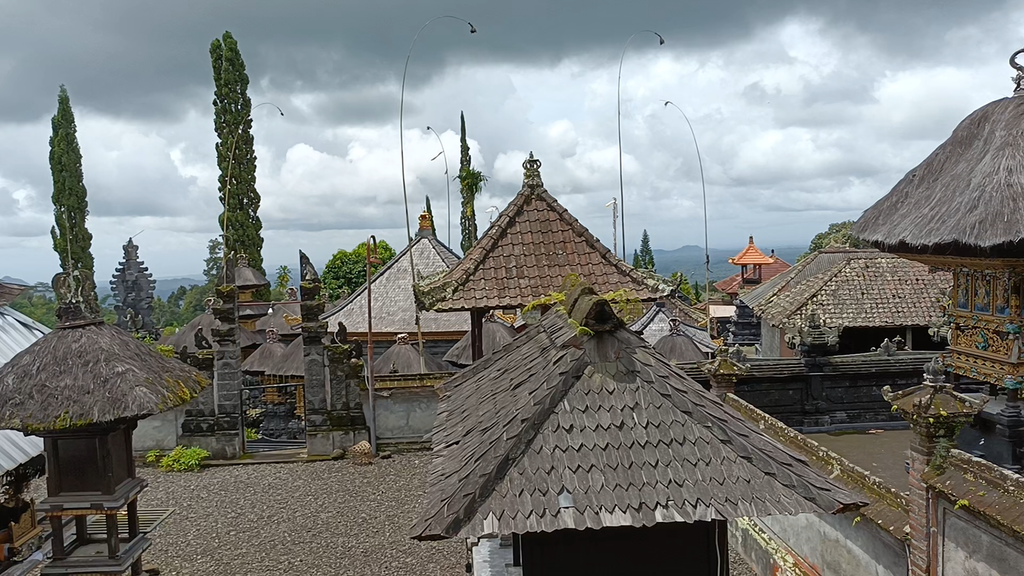
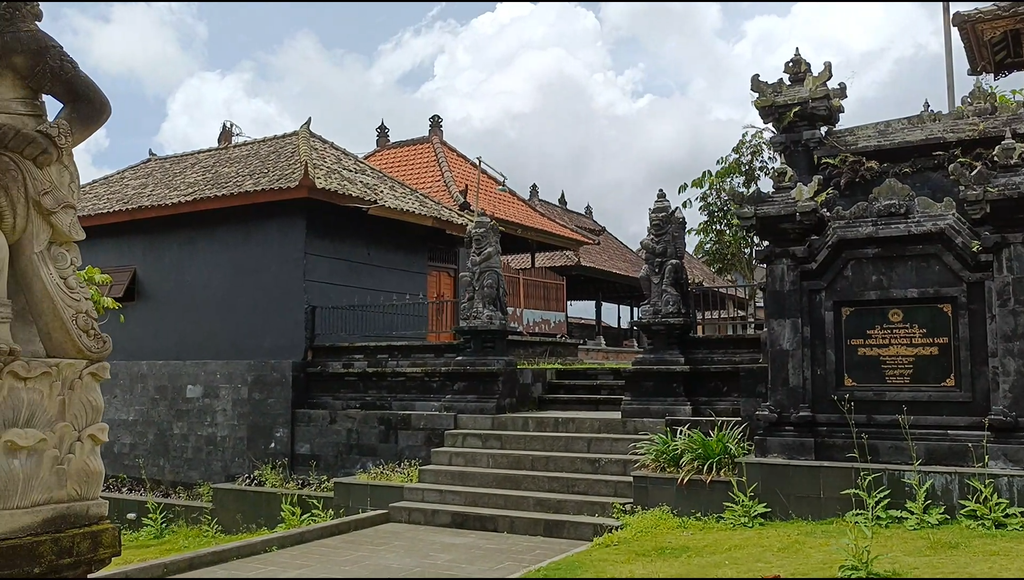
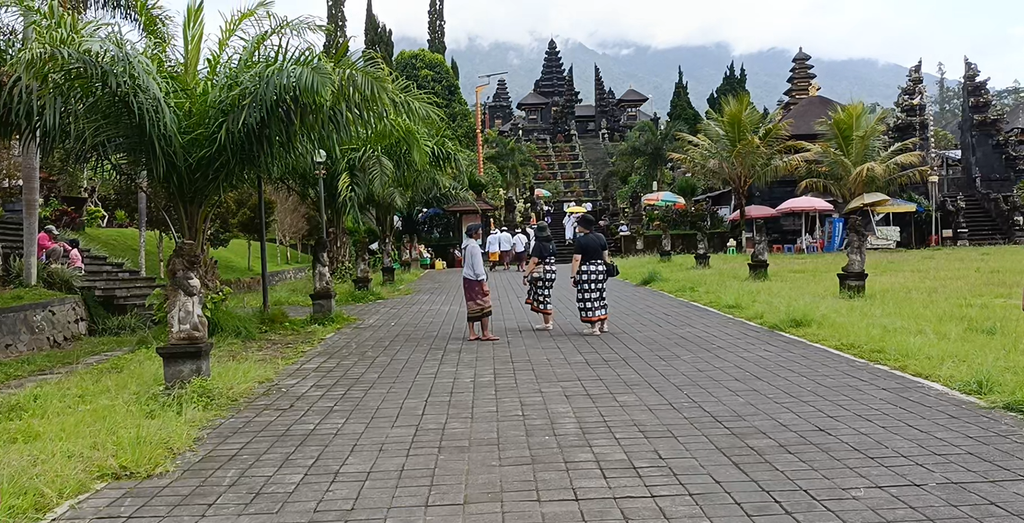
Walking through Besakih can initially be confusing because there are temples, courtyards, gateways and shrines seemingly everywhere. This is precisely what makes the complex so fascinating.
The temples were built at different times and for different purposes. There are major public temples, temples belonging to communities and regions, and shrines associated with particular clans, families, social groups and royal lineages.
Different social groups have traditionally maintained their own temples or shrines within the wider Besakih complex. These include temples associated with the Brahmana, Ksatria, Wesia and Sudra social groups, as well as numerous clan and ancestral temples.
Different regions and communities throughout Bali also have their own sacred connections to Besakih.
Rather than thinking of Besakih as one enormous temple, it is better to imagine it as a sacred religious landscape made up of many temples, each with its own history, community and purpose.
The Royal Connection
One of the most interesting aspects of Besakih is its connection with Bali’s former royal families.
During the period of the Balinese kingdoms, Besakih received strong royal patronage and became closely associated with the ruling dynasties. The Gelgel dynasty played an important role in establishing Besakih as a state temple.
The complex contains shrines connected with royal and aristocratic families and with the ancestors of important ruling lineages. Merajan Selonding, for example, is associated with the royal history of Besakih.
This royal presence gives Besakih another layer of meaning. It was not only a place where ordinary Balinese people came to pray; it was also a sacred centre connected with the rulers who governed Bali.
Magnificent Balinese Architecture
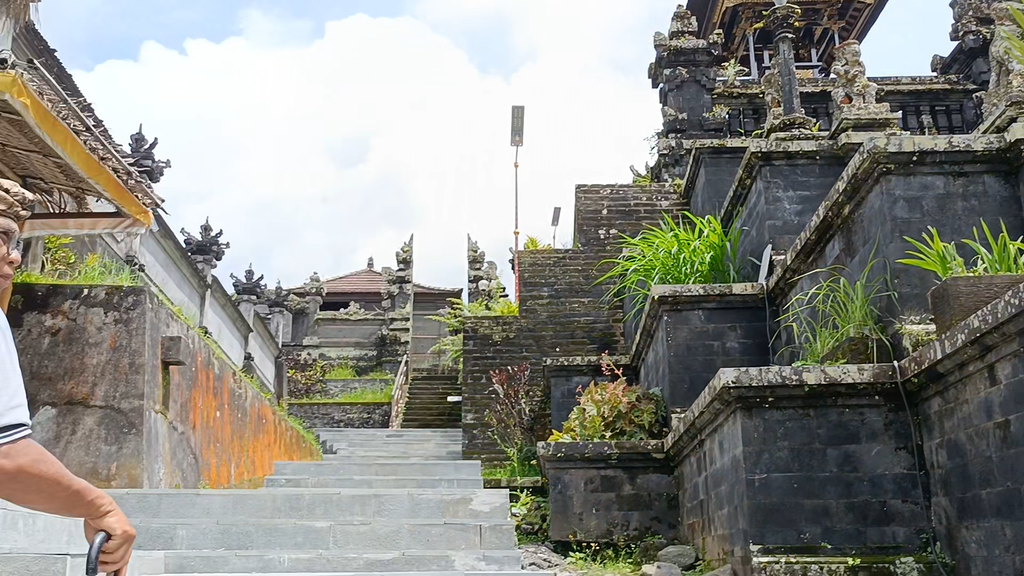
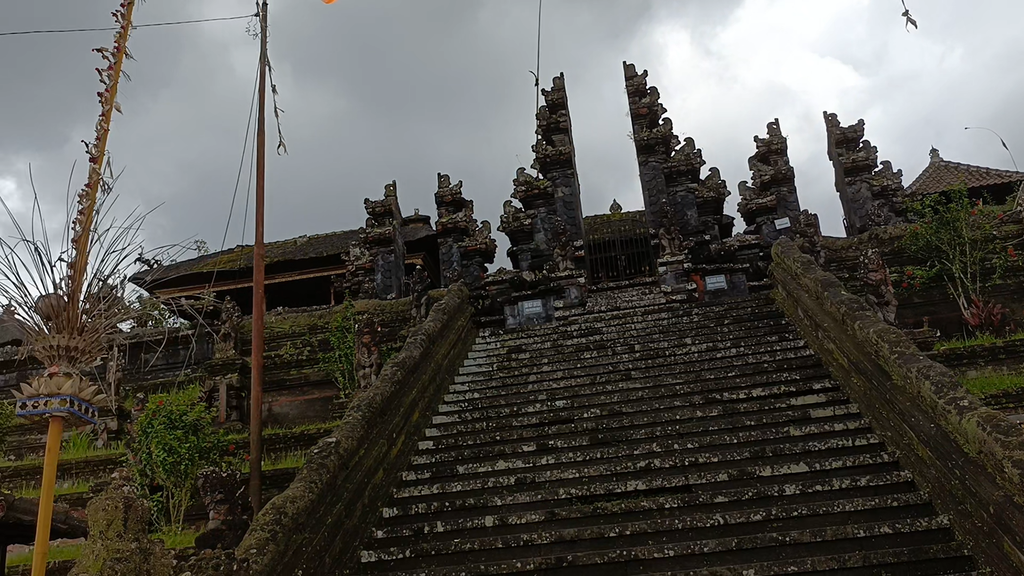
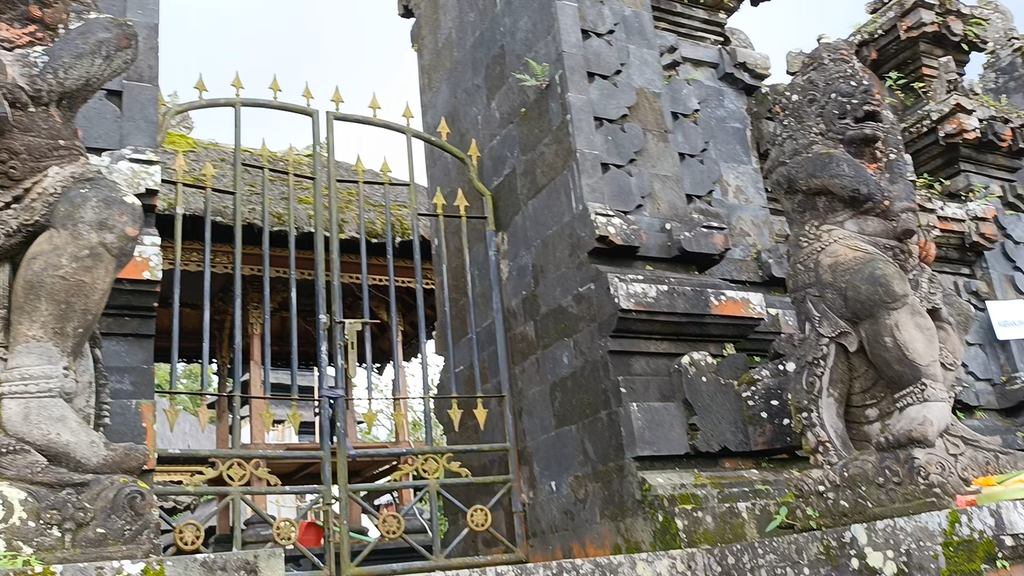
The architecture of Besakih is one of its greatest attractions.
The entire complex climbs the natural slopes of Mount Agung, with terraces, stairways, courtyards and gateways leading visitors gradually upwards. This vertical arrangement is highly symbolic. Mount Agung itself is considered sacred, and the upward movement through the temple complex represents a spiritual journey towards the divine.
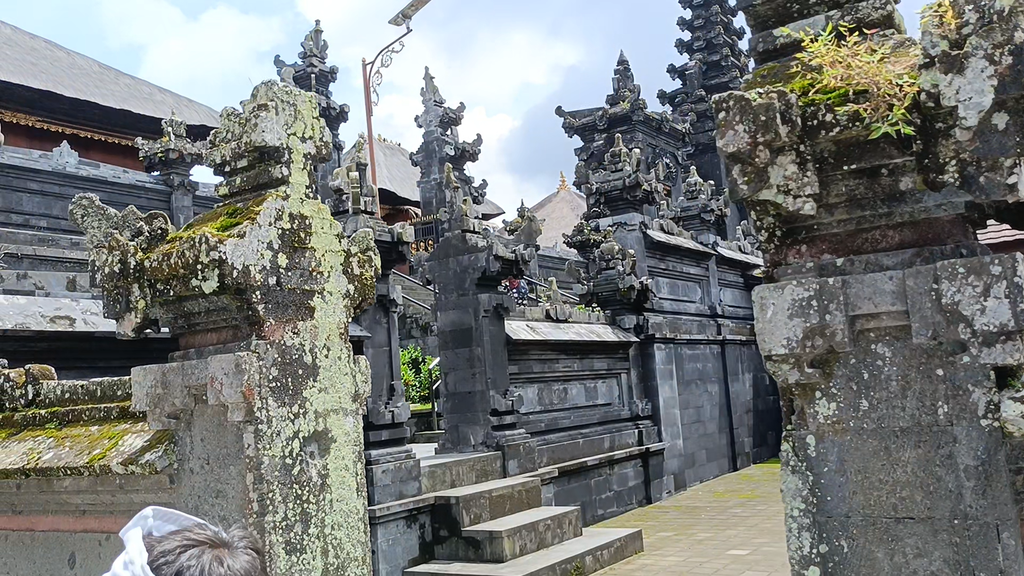
One of the most recognisable features is the Candi Bentar, the distinctive split gateway found in Balinese temple architecture. Beyond these gateways are courtyards containing shrines, pavilions and magnificent Meru towers.
The Meru is a multi-tiered, pagoda-like shrine traditionally covered with dark palm-fibre roofs. The number of tiers varies and carries religious significance. Some of the most important Meru have eleven tiers, while others have fewer.
The temple buildings also feature beautifully carved stonework, elaborate gates, traditional wooden structures and ceremonial decorations. The dark volcanic stone contrasts dramatically with the green landscape surrounding the temple.
Pura Penataran Agung – The Heart of Besakih
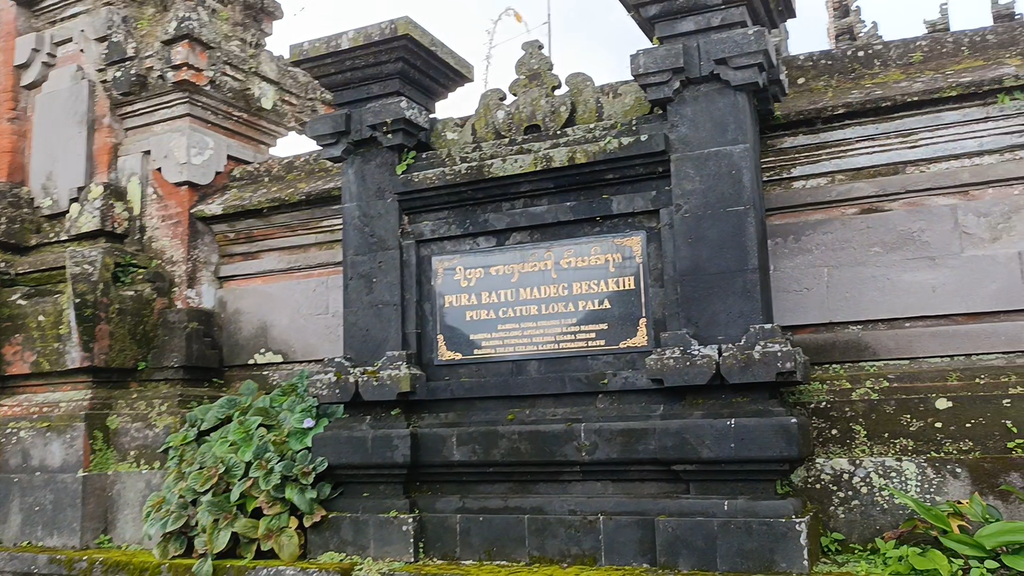
At the centre of the complex is Pura Penataran Agung, the largest and most important temple at Besakih.
Its six ascending terraces follow the slope of Mount Agung and create a powerful sense of movement from the earthly world towards the sacred mountain. The temple is regarded as the principal ritual centre of the Besakih complex.
Another important feature is the Padma Tiga, a sacred three-seat lotus throne that represents the divine presence and serves as a major ritual focus.
Besakih’s three principal temples also represent important aspects of Balinese Hinduism:
- Pura Penataran Agung – associated principally with Shiva/Sang Hyang Widhi Wasa
- Pura Kiduling Kreteg – dedicated to Brahma
- Pura Batu Madeg – dedicated to Vishnu
Together, they reflect the Hindu concept of the divine trinity of Brahma, Vishnu and Shiva.
The Philosophy Behind the Temple
Besakih’s design is not simply beautiful architecture. It reflects the Balinese philosophy of Tri Hita Karana — the idea that human life should maintain harmony between God, people and nature.
The temple’s position on Mount Agung is therefore extremely significant. The mountain is regarded as sacred, and the temples are arranged in relation to the mountain, the directions and the surrounding landscape.
The result is an extraordinary combination of religion, architecture, nature and community.
A Living Place of Worship
Although Besakih has become one of Bali’s most famous tourist attractions, it remains a functioning place of worship.
Throughout the year, numerous ceremonies are held here, and each temple within the complex can have its own odalan, or temple anniversary. During major religious celebrations, thousands of Balinese Hindus come to Besakih to pray and participate in ceremonies.
This is what makes visiting Besakih different from visiting an ancient monument. It is not simply a historic building preserved for tourists — it is a living spiritual centre that continues to play an important role in Balinese Hindu life.
The 1963 Eruption of Mount Agung
Perhaps one of the most remarkable chapters in Besakih’s modern history occurred in 1963, when Mount Agung erupted.
The eruption caused enormous destruction in surrounding areas and claimed many lives. Lava flows came remarkably close to the temple complex but did not destroy Besakih. For many Balinese Hindus, the survival of the temple was regarded as a divine sign.
Today, standing at Besakih and looking towards Mount Agung, it is easy to understand why the mountain and the temple are so deeply connected in Balinese religious belief.
Why Besakih Is Worth Visiting
Pura Besakih is much more than Bali’s largest temple complex. It is a place where history, Hinduism, royal heritage, traditional social structures, architecture and nature come together.
Its many temples tell different stories. Some belong to particular communities, some to clans and ancestral groups, while others reflect Bali’s royal past. The magnificent Meru towers rise towards the sky, while the terraces climb towards the sacred slopes of Mount Agung.
For a traveller, the most rewarding way to experience Besakih is not simply to photograph its famous gateway. Take time to appreciate the complexity of the entire sacred landscape and the fact that, within this one vast compound, different communities, social groups, clans and royal lineages have their own sacred places while remaining part of one great temple complex.
That remarkable combination of diversity and unity is perhaps what makes Pura Besakih truly deserving of its title — the Mother Temple of Bali.